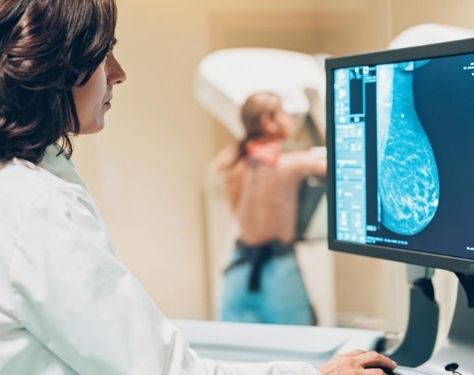
Mammography is a non-invasive breast examination that can detect breast cancer and other breast disorders. A specialist will use a unique device to take X-rays of the breasts during mammography. To create a better view of the breast tissue, the machine compresses the breast among plates.
Why it is performed?
It is performed as a screening procedure on women who have any signs or symptoms of breast cancer such as:
Thickening or inflammation of the breast or part of the breast
Dimpling of the tissue of a breast
A change in breast shape and size
A feeling of heaviness in one breast
Retraction of nipple
It is also performed on women who don’t have any symptoms to detect breast cancer.
How this test is performed?
Normally, the exam is carried out while you are standing. To help you keep still while the pictures are taken, the computer has handles that you can grasp. Sitting mammography can also be conducted for those who are unwilling to stand.
What to expect from results?
Images from a mammography will help your breasts locate calcifications or deposits of calcium. The examination will also find cysts and any cancerous or noncancerous lumps, fluid-filled sacs that can usually come and go during certain women’s menstrual cycles.
How to do Digital Mammography?
During Digital Mammography Your breast is flattened and compressed into two plates by a technician. Then they photograph the breast from top to bottom and side to side. The whole procedure only takes about 20 minutes. Mammograms are preserved on hard drives. The X-rays are converted into electric signals that can be processed in a device with the digital kind. It operates similarly to how digital cameras capture and store images.
Consult
Dr. Manju Whig Singh acknowledges women’s fears and concerns about breast cancer and delivers the appropriate treatment and assistance throughout the whole process.